How our tarhana is made
The bowl begins 21 days before we serve it.
We don't begin with a soup base. We begin by making yogurt. Ten stages, and only the last two happen with a stove lit for soup.
 01
01Stage 01
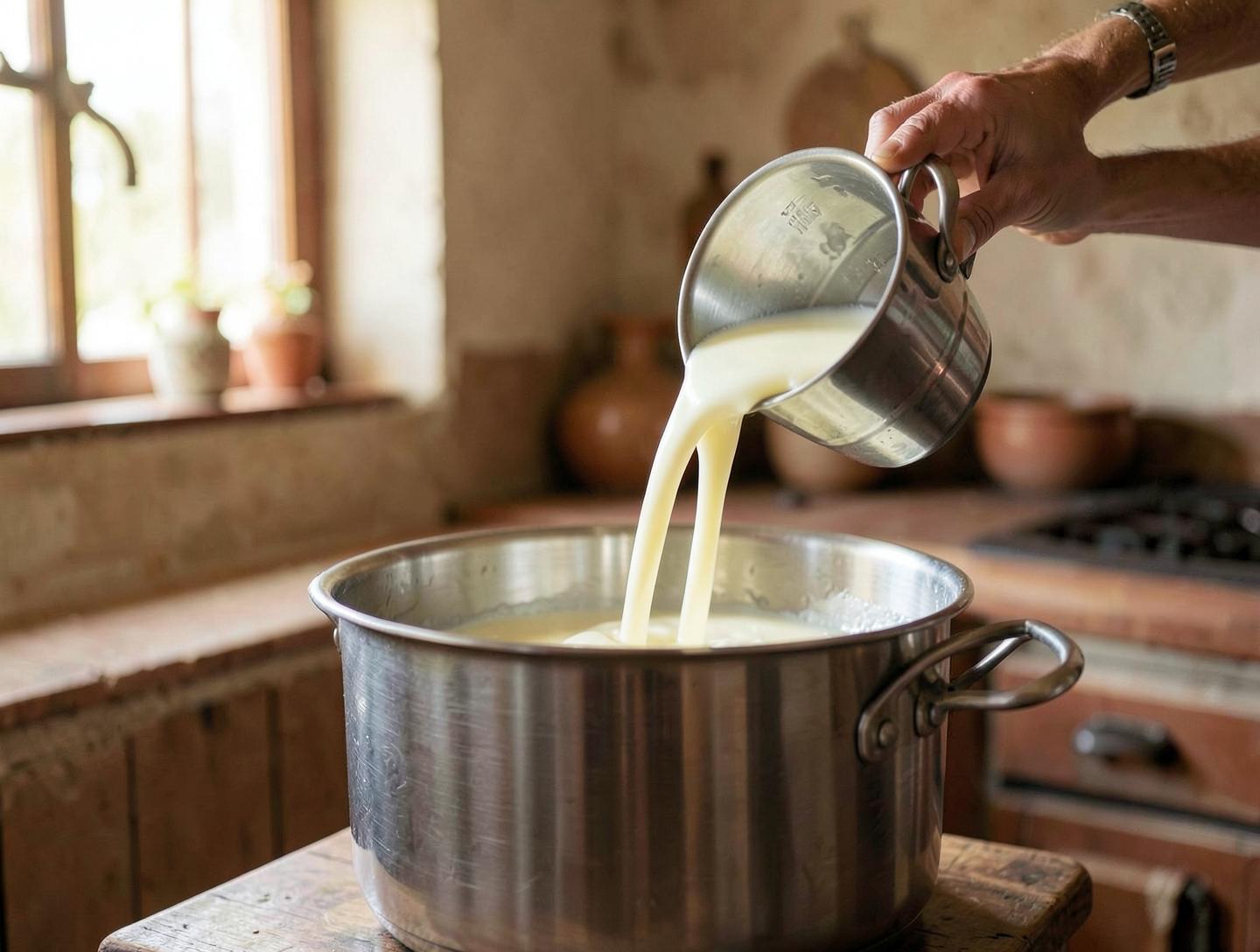
Milk
Before there is tarhana, there is yogurt.
Our process begins with milk, transformed into yogurt before becoming part of the tarhana dough. Nothing arrives as a ready-made soup base.
 02
02Stage 02
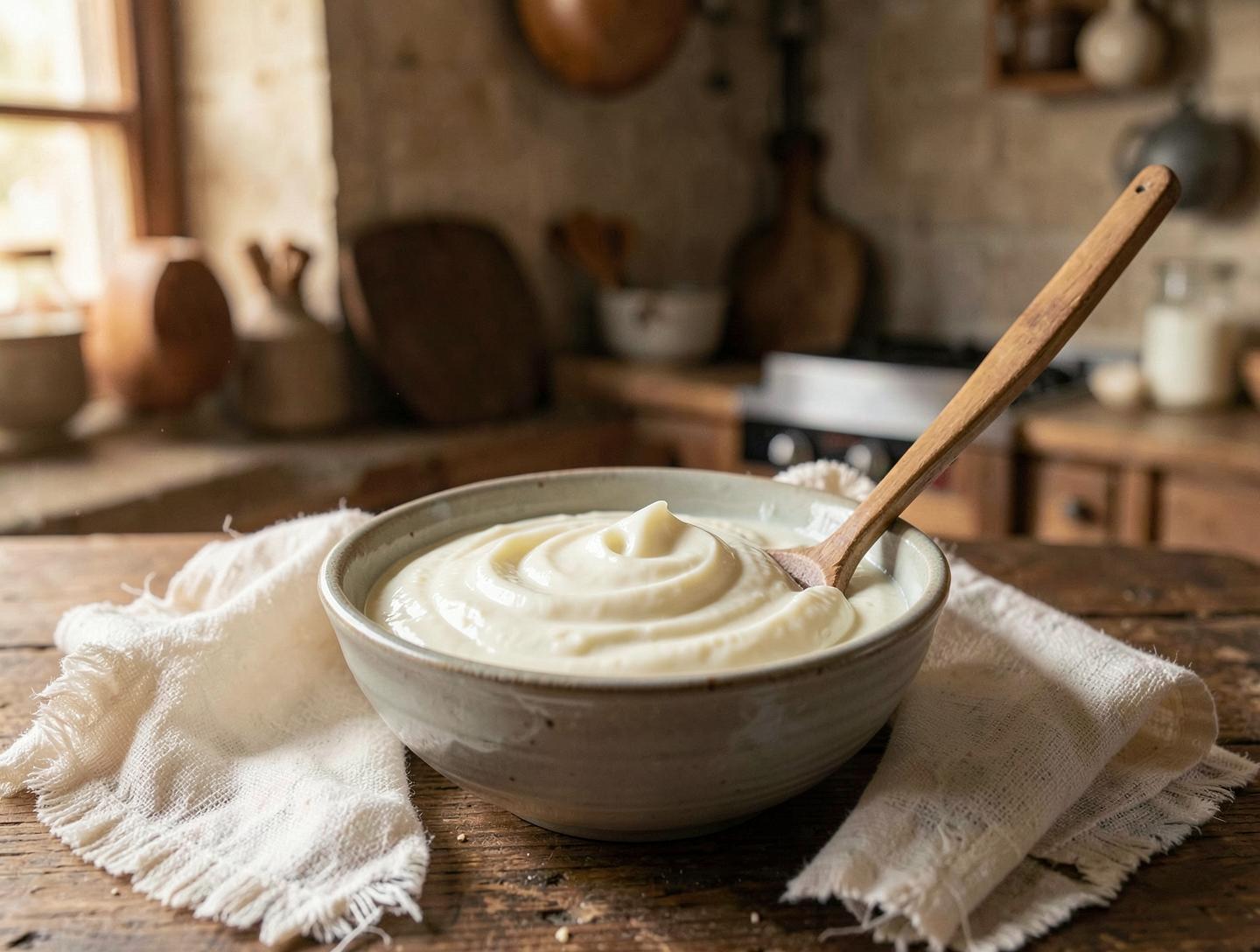
Yogurt
The milk is cultured into yogurt.
The milk is cultured and left to set into yogurt — the first of several stages that happen long before a stove is lit for soup.
 03
03Stage 03
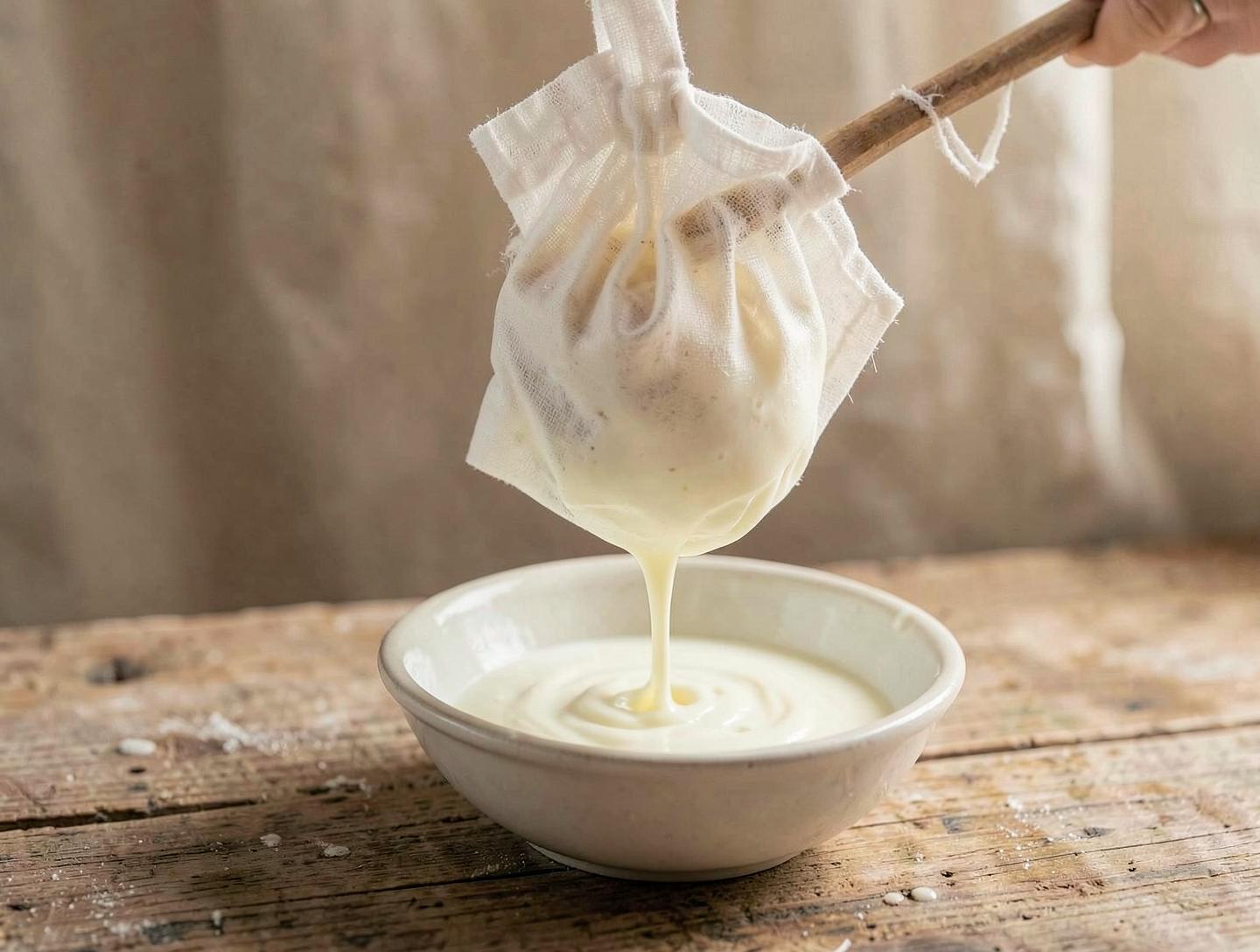
Straining
Hung in cloth bags until thick and concentrated.
Once the yogurt is ready it is placed into cloth bags and allowed to drain, removing excess liquid. The result is the thick strained yogurt known in Turkish as kese yoğurdu — the base that gives our tarhana part of its distinctive character.
 04
04Stage 04
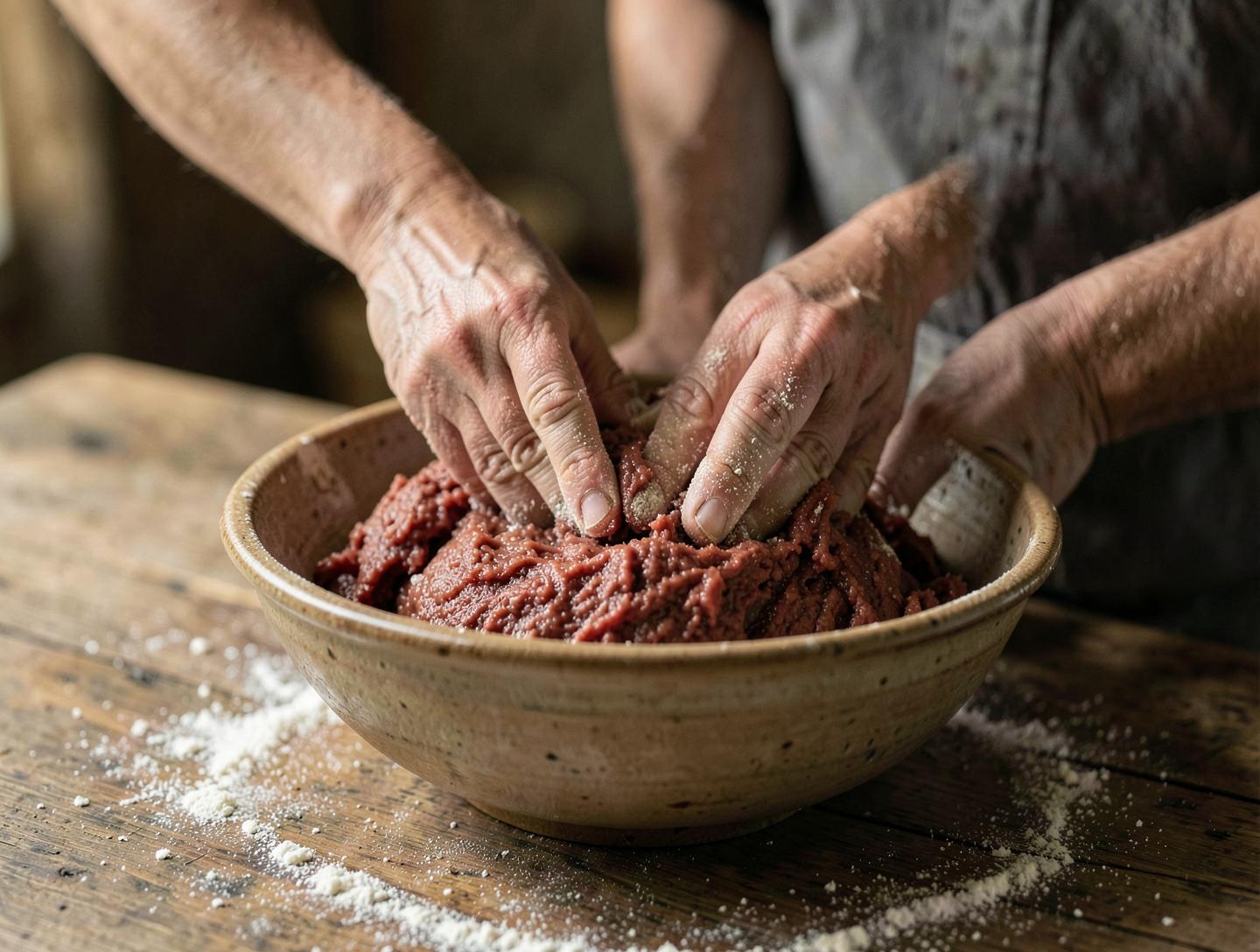
Vegetable base
Onions in olive oil, then tomatoes and red kapya peppers.
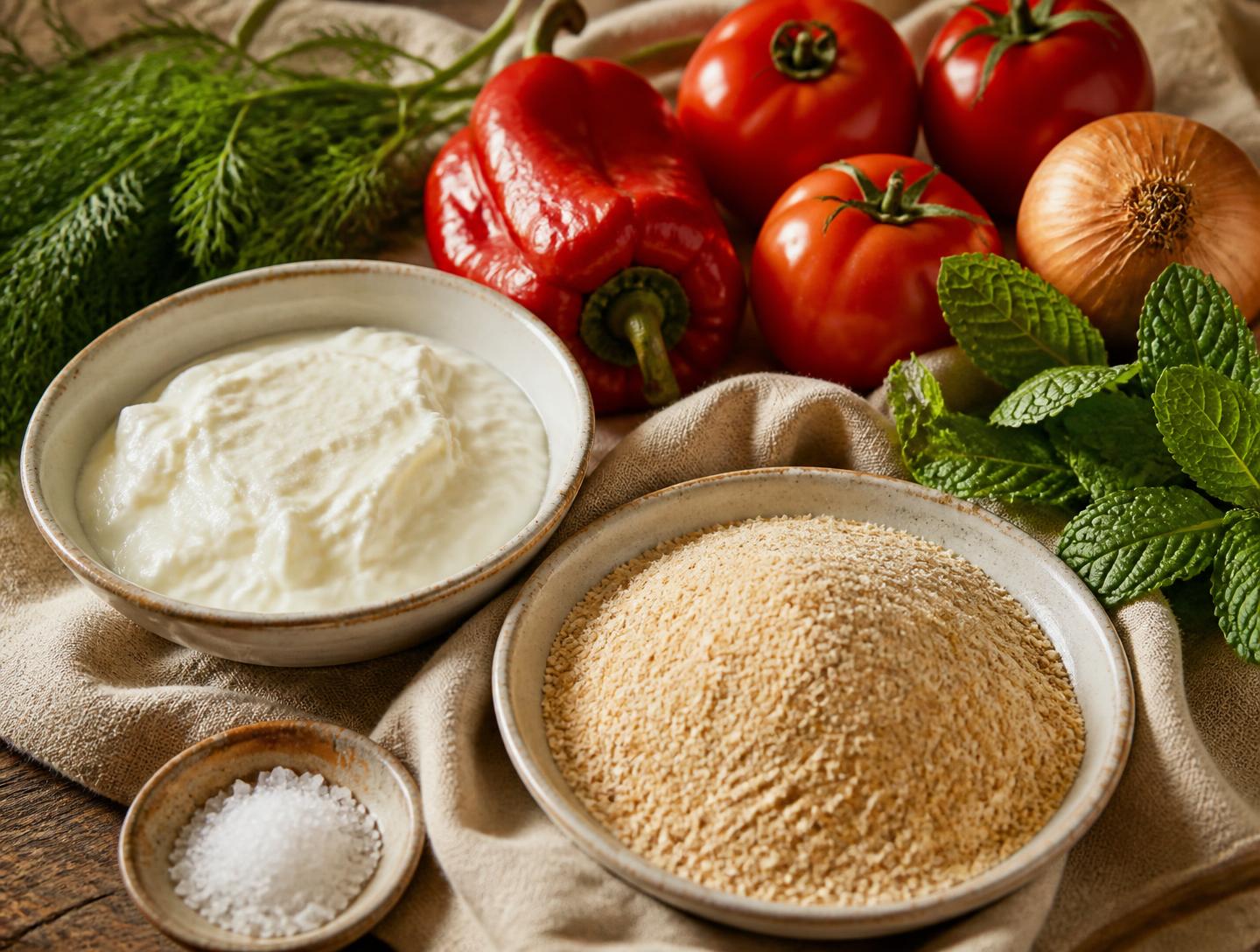
Onions are grated and slowly cooked in olive oil before grated tomatoes join the pot, followed by red kapya peppers. The mixture cooks down until thick, then is blended smooth.
 05
05Stage 05
The dough
Flour, herbs and the prepared ingredients come together.
The strained yogurt and the vegetable base are brought together with flour, mint, parsley and salt, and worked into the tarhana dough. Our family method can be made with wheat flour and cooked chickpeas, or with chickpea flour — the flour we will use commercially is still being decided, so we are not publishing a final ingredient or allergen statement yet.
 06
06Stage 06
21 days
Then we wait. Tarhana cannot be rushed.
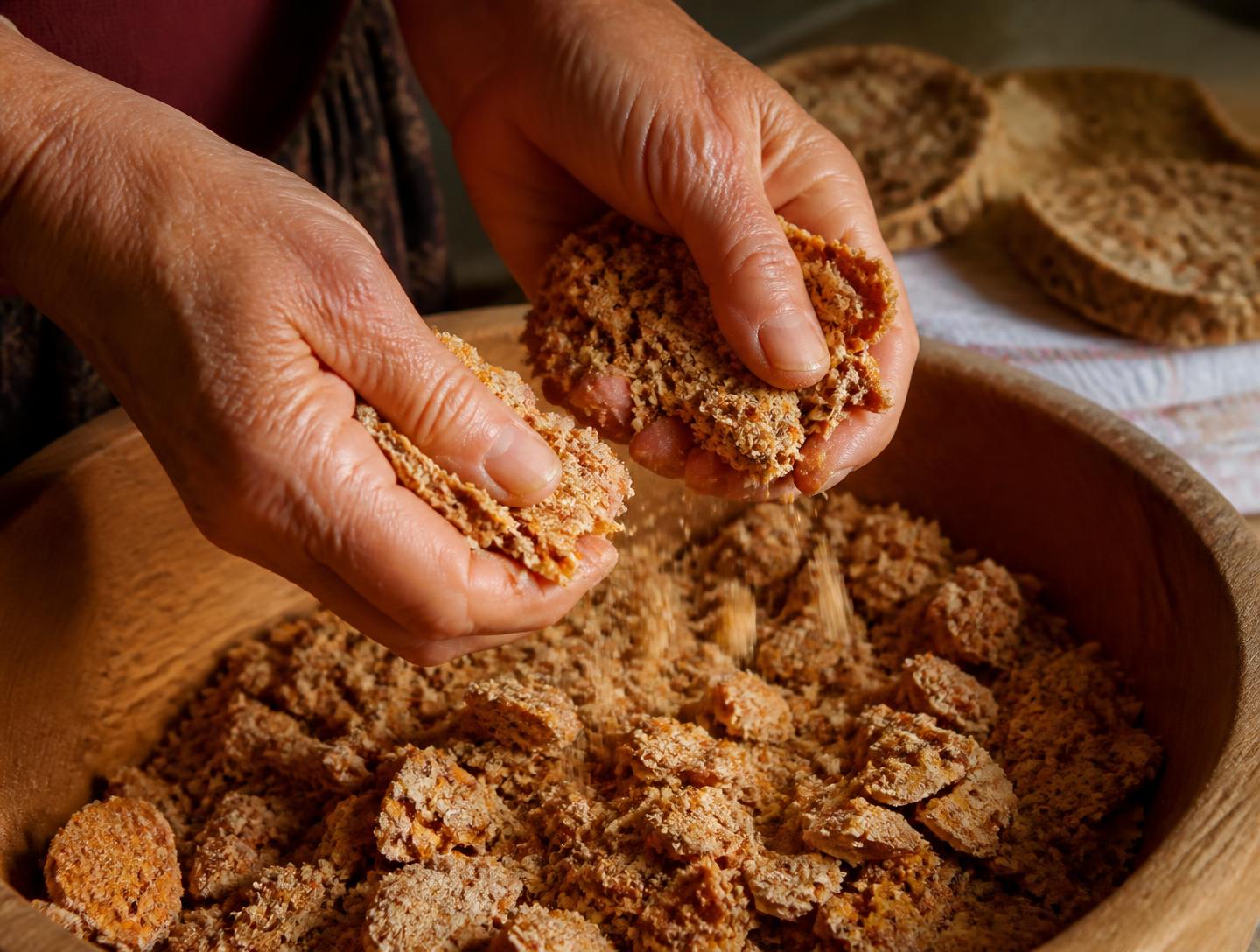
For approximately 21 days the dough is allowed to ferment, and is mixed regularly as its flavour and character develop. When the active rising has subsided, it is ready for drying.
 07
07Stage 07
Shade drying
Dried slowly, away from direct sun.
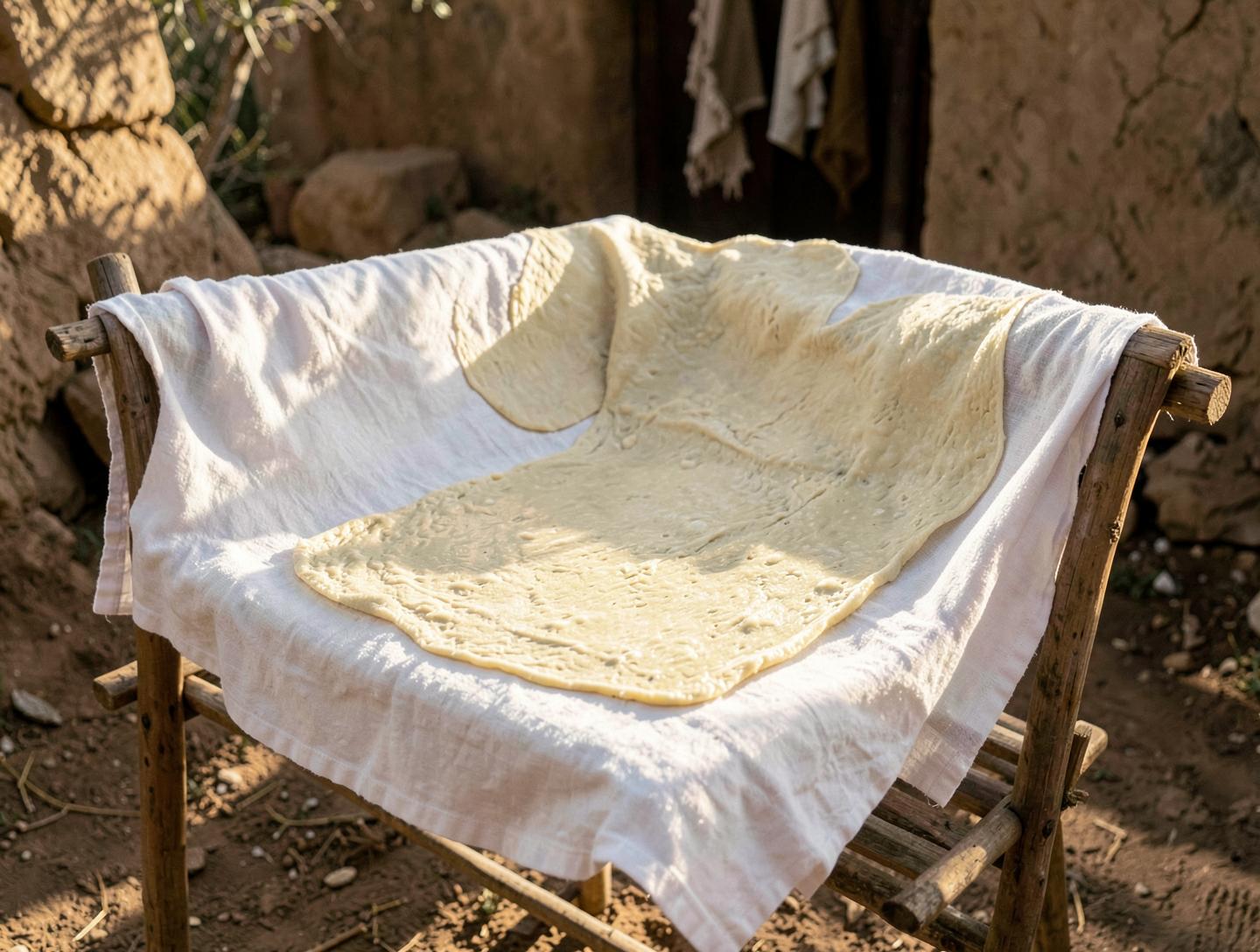
Once fermentation is complete the dough is divided into small pieces — traditionally about the size of a spoonful — and laid out to dry away from direct sunlight.
 08
08Stage 08
Crumbling & sifting
Crumbled and sieved until the texture is right.
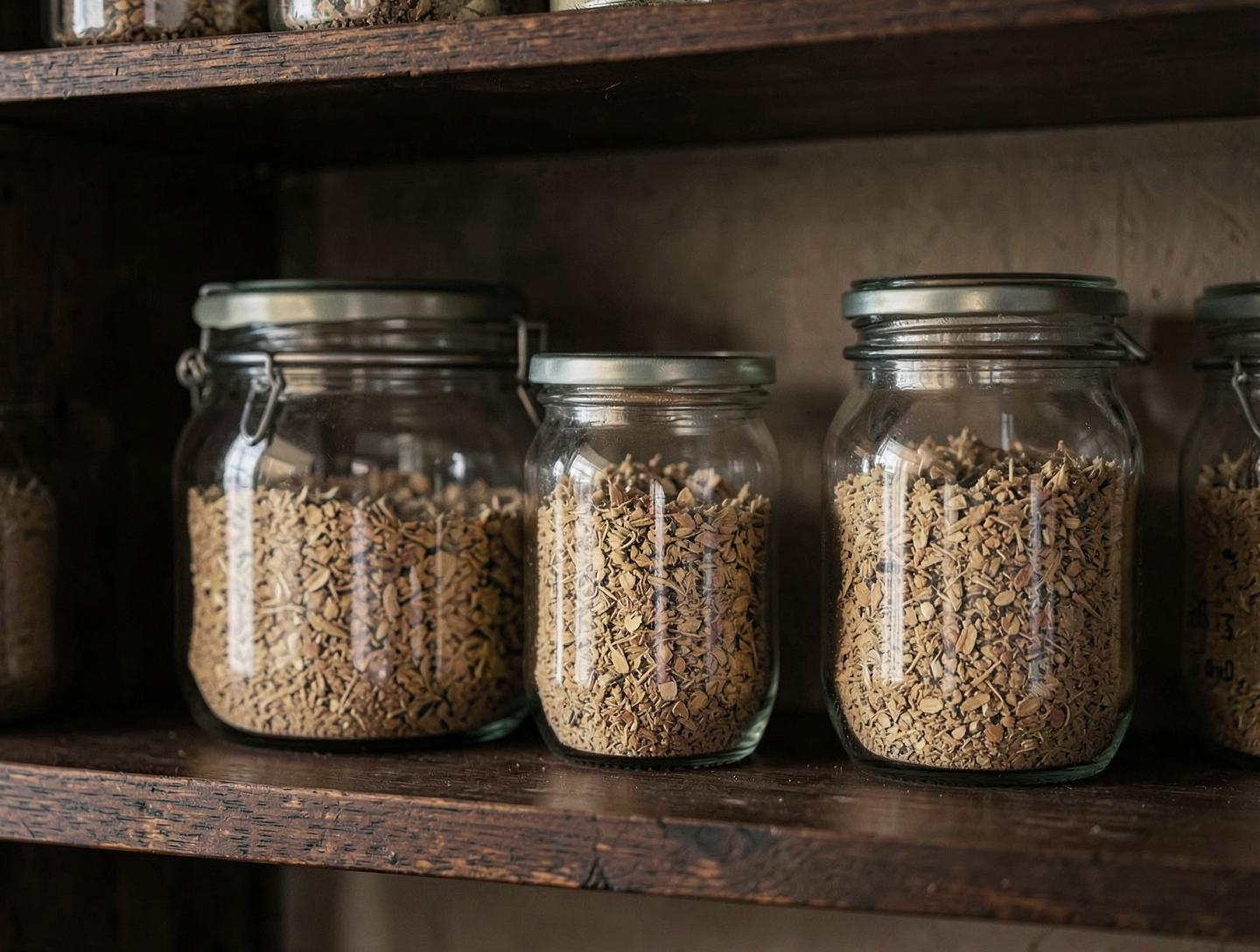
The dried pieces are gradually crumbled into smaller particles and passed through a sieve. Anything too large goes back through the process until the tarhana reaches the texture we want. Then it is stored dry until it is cooked.
 09
09Stage 09
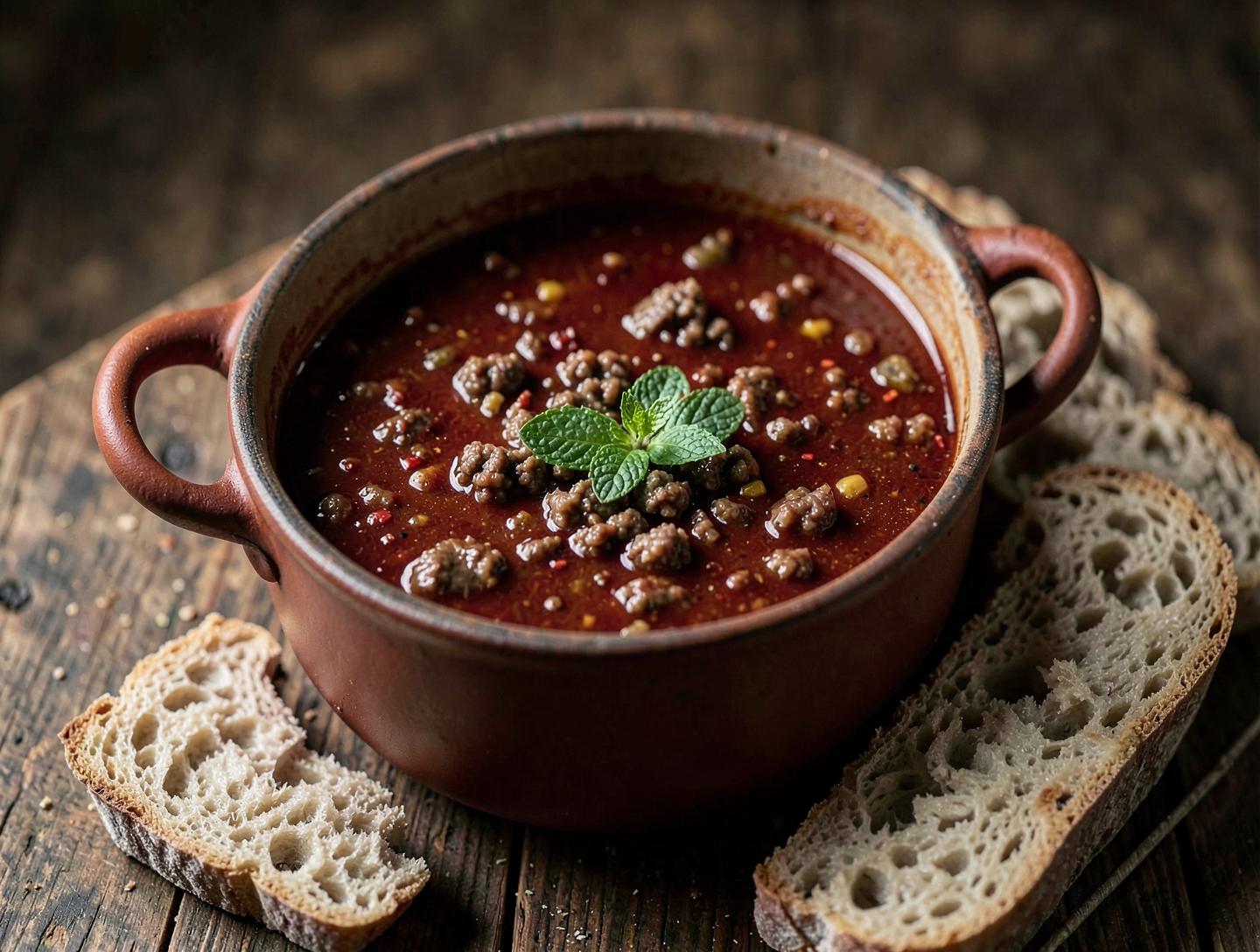
Cooking with beef
The dried tarhana becomes soup in our kitchen.
At Soup & Smile, our fermented tarhana is slowly cooked with ground beef. The final standardised restaurant recipe is still being settled, so we are not publishing exact quantities yet.
 10
10Stage 10
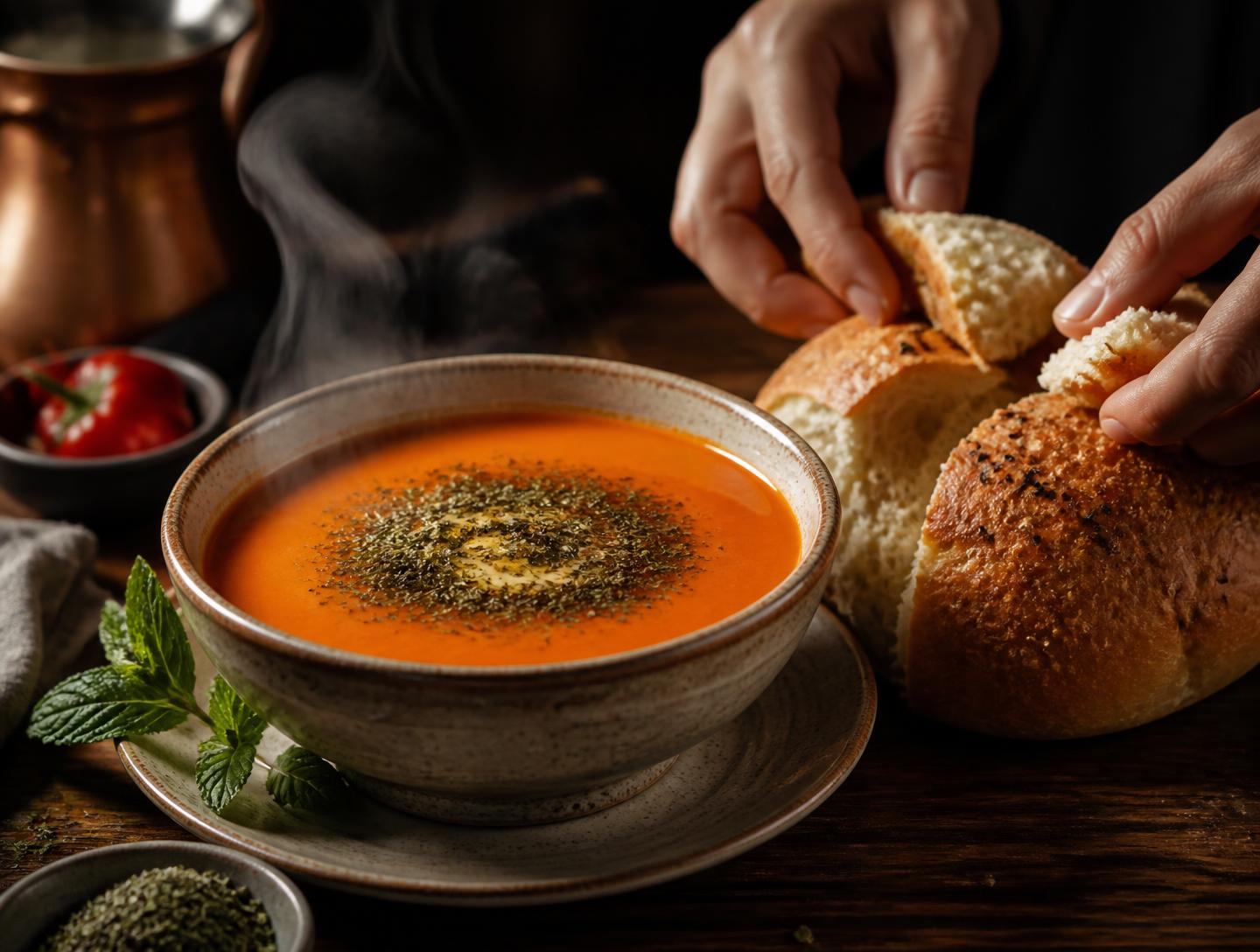
The bowl
Served hot, with our house-baked bread.
The finished bowl is handed over hot, with bread baked here in small batches alongside it. Twenty-one days of patience, in one bowl.
Stage 06
21 days of fermentation.
Then we wait. For approximately 21 days the dough is allowed to ferment and is mixed regularly as its flavour and character develop. When the active rising has subsided, it is ready for drying. Tarhana cannot be rushed.
Dried slowly. Away from direct sun.
Once fermentation is complete, the dough is divided into small pieces — traditionally about the size of a spoonful — and allowed to dry away from direct sunlight. The dried pieces are then crumbled and sifted; anything too large goes back through the process until the tarhana reaches the texture we want.
From dry tarhana to the bowl
Making tarhana, then cooking it.
The 21-day process produces the dried tarhana. Our kitchen turns that tarhana into the final bowl: it is slowly cooked with ground beef and served hot with our house-baked bread.
The final standardised restaurant recipe is still being settled, so we do not publish exact quantities or a finished cooking formula yet.
What the 21 days actually do
Fermentation is a food process, not a shortcut. Once the strained yogurt, cooked vegetables, flour and herbs are worked into a dough, it is left to ferment for roughly three weeks and mixed regularly during that time.
That is where tarhana's gentle sourness comes from, and why the dry flakes already smell like soup. When the active rising has subsided, the dough is ready to be dried.
We describe fermentation as flavour and tradition. We make no health or medical claims about it.
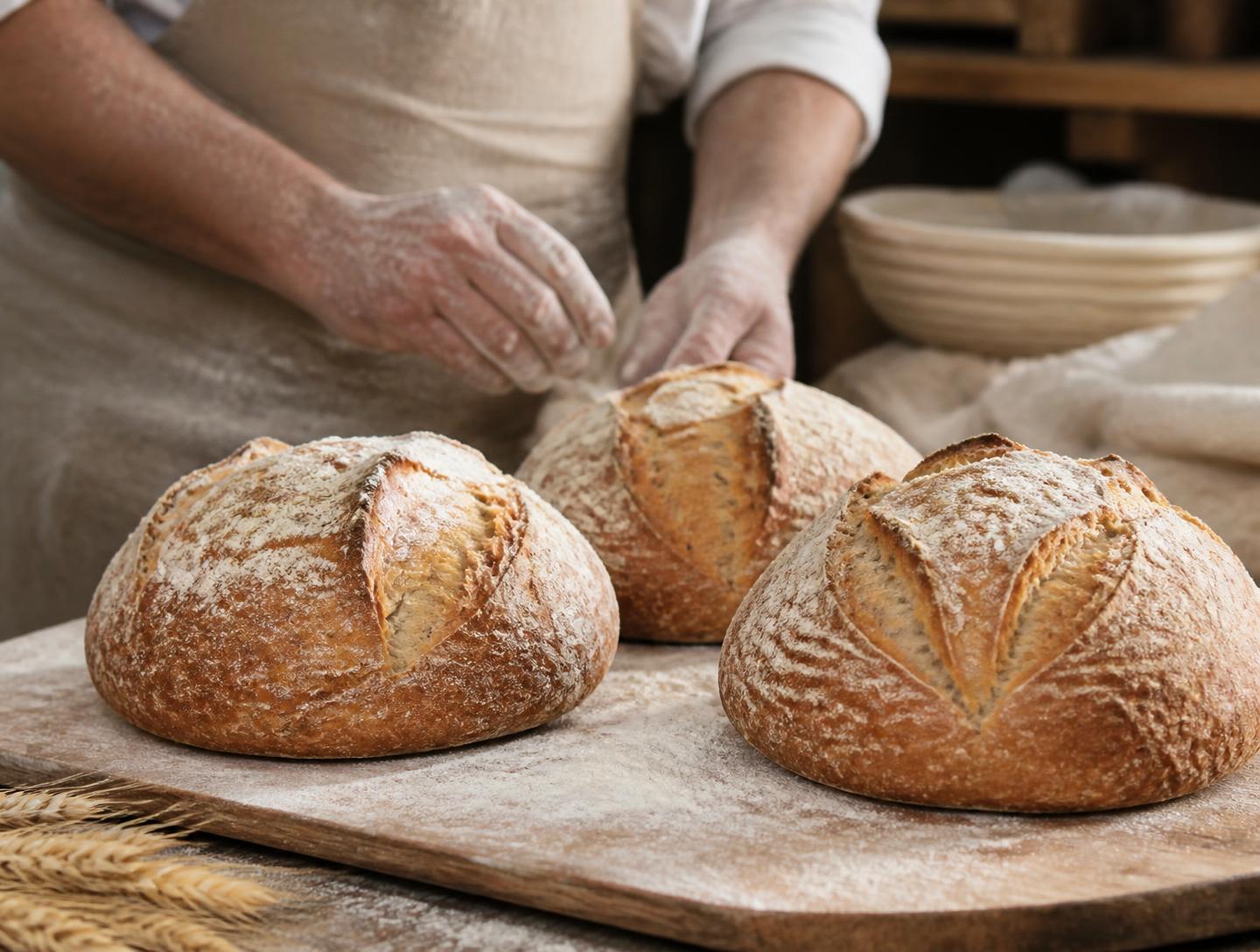
The bread
Baked here. Served warm.
Our bread is baked in-house in small batches and served warm alongside every bowl. The recipe and baking routine will be described here once they are finalised.
We describe only what we actually do. All 10 stages above are our family’s method; ingredient, allergen and recipe details will be published once the commercial recipe is confirmed.