Fermented
Tarhana begins as a dough of flour, yogurt, vegetables and herbs, left to ferment slowly. Ours is given approximately 21 days, and mixed regularly along the way.
Meet Tarhana
Tarhana is one of Türkiye's longstanding food traditions: a dough fermented, dried and crumbled, then cooked into soup when it is needed. It is the heart of everything we make.
What makes tarhana different?
Most soups get their flavour on the stove. Tarhana gets much of its flavour weeks earlier, while the dough is quietly fermenting — roughly 21 days, in our case. That is why a spoonful of dry flakes already smells like soup.
Fermented
Tarhana begins as a dough of flour, yogurt, vegetables and herbs, left to ferment slowly. Ours is given approximately 21 days, and mixed regularly along the way.
Traditional
Tarhana has deep roots in Turkish home cooking. Recipes and methods vary between regions, communities and families — ours follows the method our family knows.
Preserved
Drying is what turns a perishable dough into a pantry food. Dried tarhana keeps well in a sealed jar, ready to become soup whenever it is needed.
Handcrafted
Yogurt made and strained, vegetables cooked down, dough mixed, dried, crumbled and sieved by hand. There is no shortcut for that texture.
Comforting
Served hot with bread, tarhana is the bowl many Turkish families reach for on cold days and long ones.
The tarhana guide
A fermented, dried soup base. Flour, yogurt and cooked vegetables are worked into a dough, fermented, dried until brittle, then crumbled into coarse flakes. The flakes are the pantry product; soup is what you make from them.
Tarhana has deep roots in Turkish home cooking, and related foods are made across the Balkans, the Caucasus and the Middle East. It has long been a way of turning a short vegetable season into food for the months ahead.
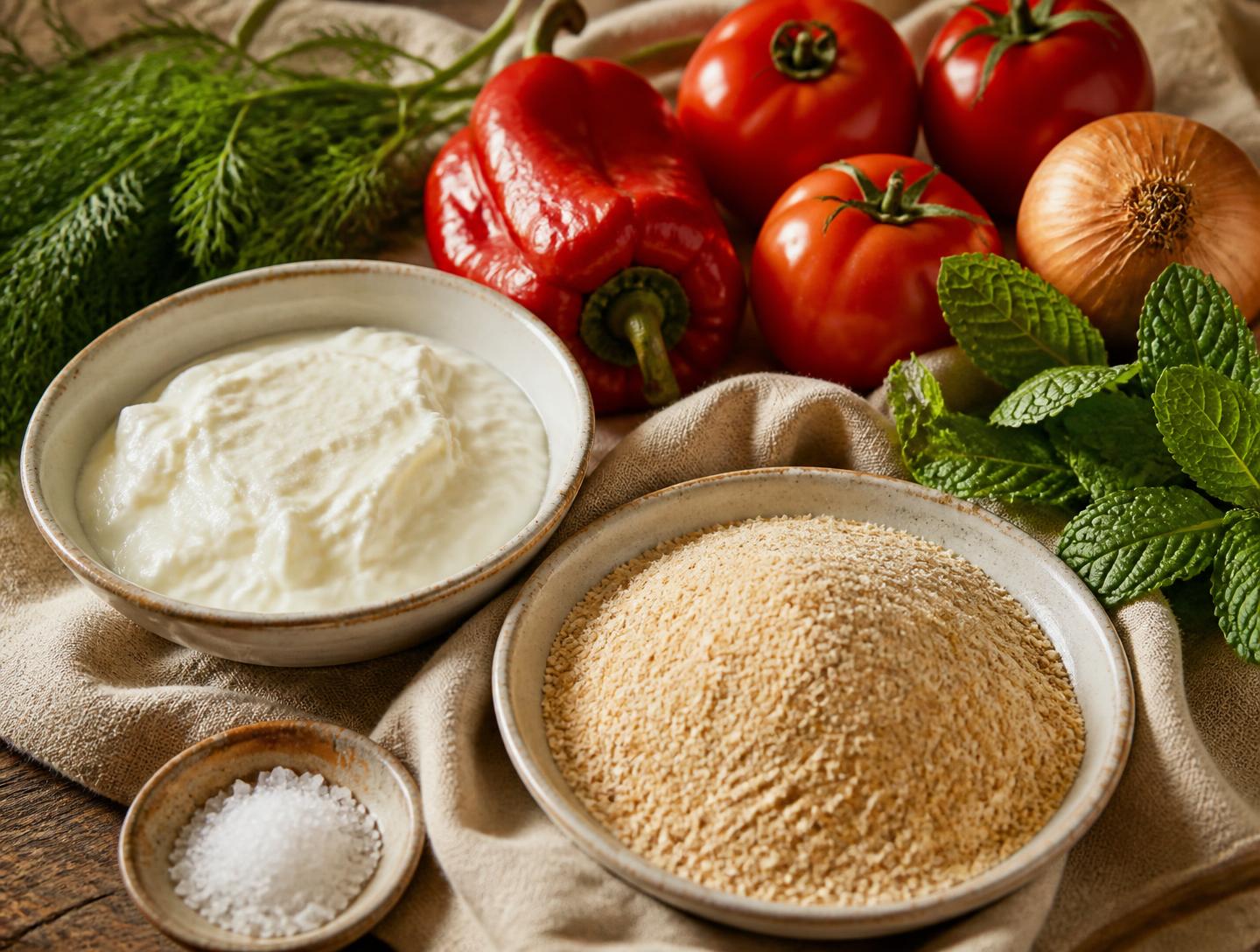
Typically flour, thick yogurt, cooked vegetables such as tomato, pepper and onion, salt and herbs. Recipes and methods vary between regions, communities and families, so no single list describes all tarhana.
Our dough is left to ferment for approximately 21 days and mixed regularly during that time. When the active rising has subsided, it is ready for drying. We describe fermentation as flavour and tradition, not health.
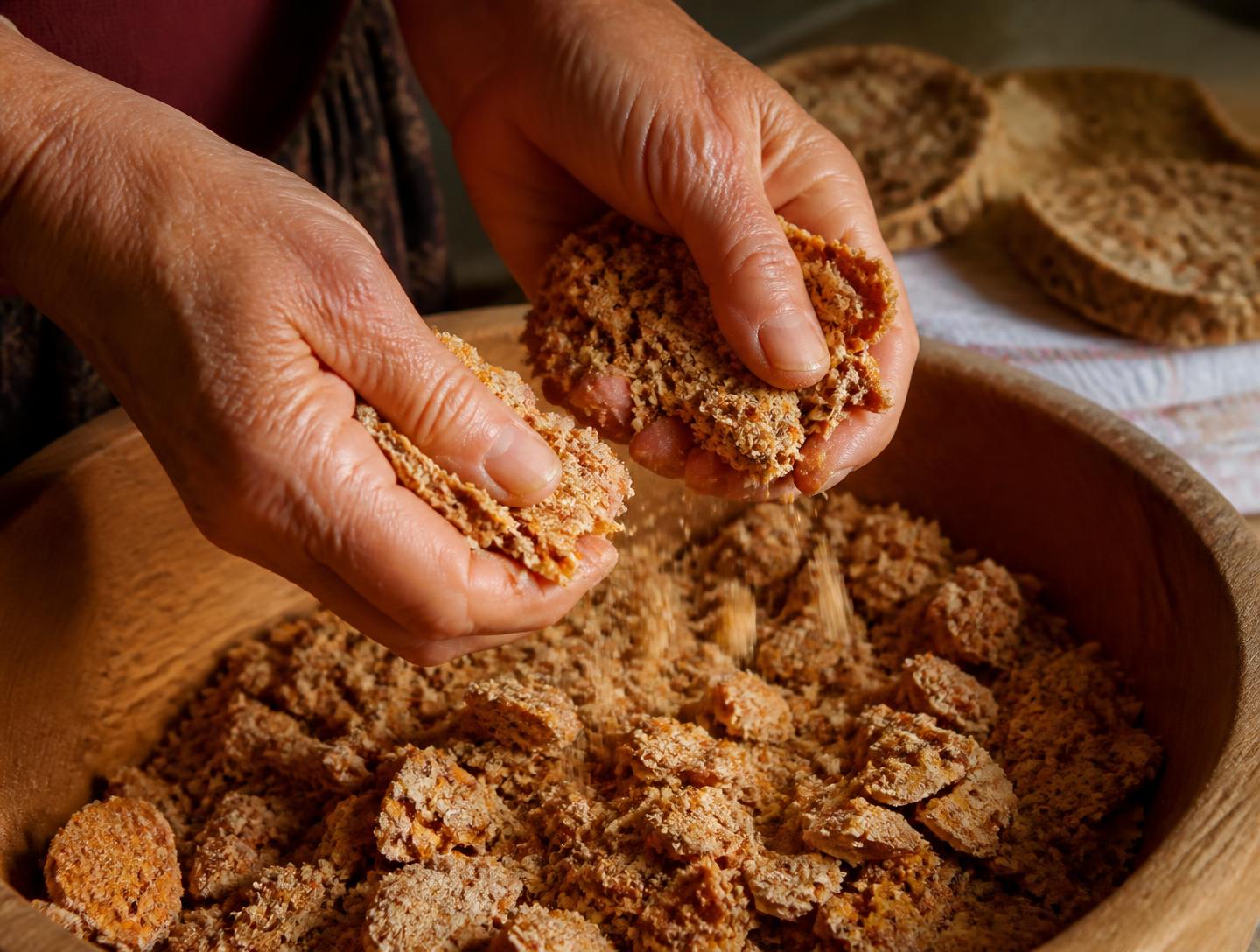
Ours is divided into small pieces and dried away from direct sunlight, then crumbled and sifted until the texture is right. Fully dried tarhana keeps well in a sealed jar in a cool, dry cupboard.
Tarhana is whisked into cold water or stock, then brought slowly to a simmer while stirring so it thickens smoothly. At Soup & Smile, ours is slowly cooked with ground beef.
Very hot, in a deep bowl, with our house-baked bread alongside. Bread is part of the bowl rather than a side.
Many. Ingredients, fermentation time, texture and the way it is served all vary. We will not publish specific regional claims until we can source them properly — what we can say is that our tarhana follows the method our family knows.
Our final commercial recipe — including the flour we use — has not been confirmed, so we do not publish nutrition figures or an allergen statement yet, and we make no gluten-free or health claims. Both will follow once the recipe is standardised.
Because it solved a real problem well: patience, fermentation and drying turned fresh vegetables and yogurt into food that kept. And it was usually made together, which is part of why it still tastes like company.
We describe tarhana as food and tradition. We do not make medical claims, and any nutritional figures we publish will refer to our own recipe.
Culture, not a formula
Tarhana is a family of recipes rather than a single product. Recipes and methods vary between regions, communities and families — ingredients, fermentation time, texture and the way it is served all differ.
Ingredients
Which vegetables, grains, dairy and herbs go in differs from kitchen to kitchen.
Fermentation
Some doughs ferment briefly; ours is given approximately 21 days.
Texture
From a fine, sandy powder to coarse crumbs and dried pieces.
Preparation
Thin and soupy or thick enough to hold a spoon, with different finishing touches.
We will not publish specific regional claims until we can source them properly. What we can say is that our tarhana follows the method our family knows.
Our Tarhana
One soup, made properly. Our tarhana follows the method our family knows: yogurt made and strained here, a slow-cooked vegetable base, and roughly 21 days of fermentation before drying. The list below is our working list, not a final label.
Working ingredient list
Our final commercial recipe — including the flour we use — has not been confirmed. The exact ingredient and allergen statement will be published once it is. We make no gluten-free, allergen-free or nutritional claims in the meantime.
What the 21 days actually do
Fermentation is a food process, not a shortcut. Once the strained yogurt, cooked vegetables, flour and herbs are worked into a dough, it is left to ferment for roughly three weeks and mixed regularly during that time.
That is where tarhana's gentle sourness comes from, and why the dry flakes already smell like soup. When the active rising has subsided, the dough is ready to be dried.
We describe fermentation as flavour and tradition. We make no health or medical claims about it.